
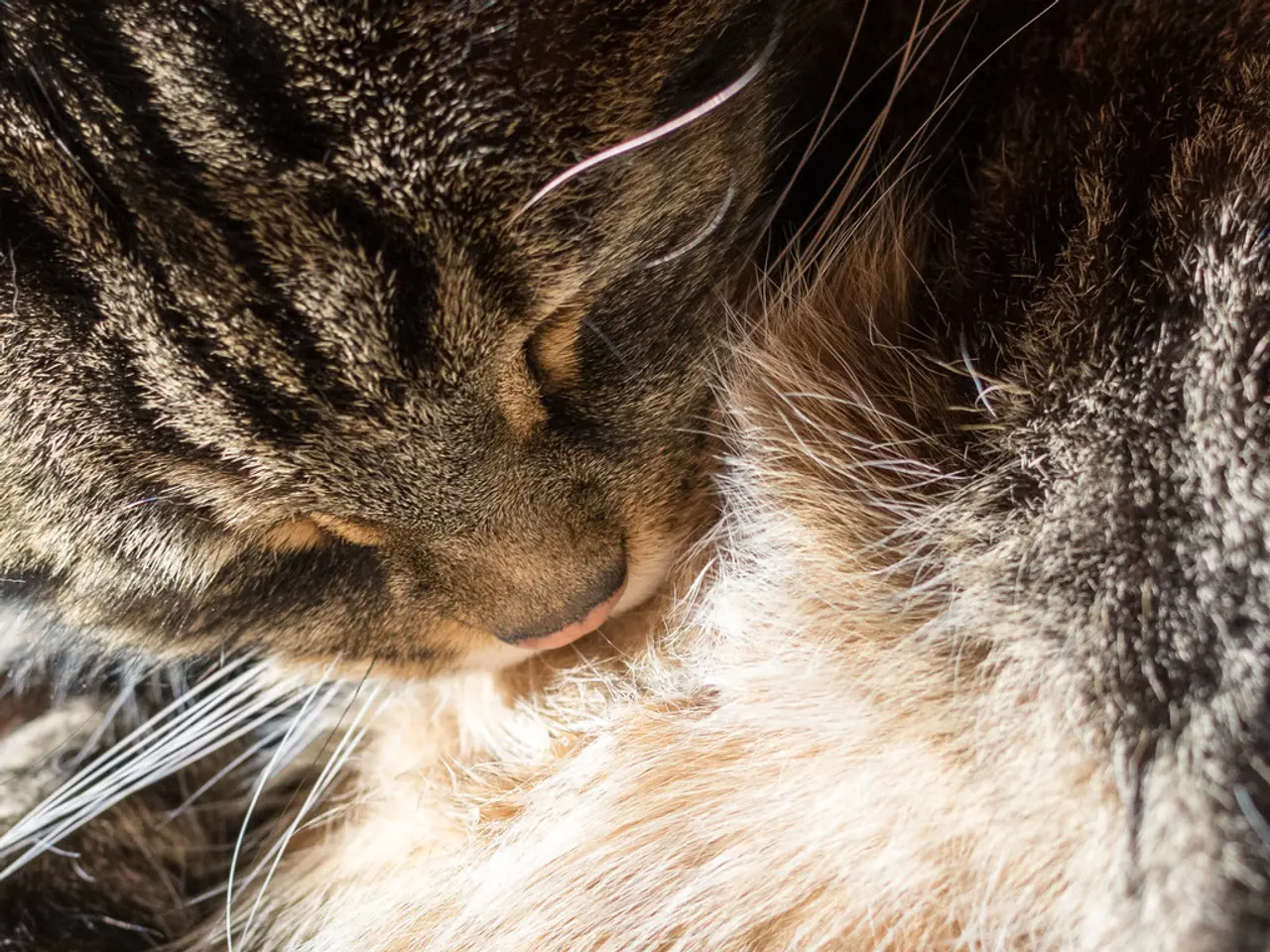
Cats possess a distinctive tongue structure and male genitalia.
In the world of felines, the intricacies of their anatomy are as fascinating as their playful personalities. Two such structures, found on a cat's tongue and penis, play crucial roles in their daily lives and reproductive system.
The papillae on a cat's tongue are tiny, backward-facing, keratinous spines that serve multiple important functions. These structures help cats groom themselves efficiently by detangling and removing loose fur, acting like built-in combs. They also assist in cleaning meat off bones when eating and moving food toward the back of the mouth. Additionally, the U-shaped tips of the papillae act like wicks to collect saliva during grooming. These papillae are made of keratin, the same material as human fingernails, making them tough and rough to the touch [1][2][3][4][5].
Regarding the papillae on a cat's penis, although not detailed in the search results, it is well established in feline biology that male cats have penile spines (papillae) that are also keratinized. The function of these papillae on the penis is to stimulate ovulation in the female during mating, as cats are induced ovulators. These spines provide tactile stimulation necessary to trigger the female's hormonal ovulation response.
A summary table for the two structures is as follows:
| Location | Structure | Composition | Purpose/Function | |------------|---------------------------------|-------------------|------------------------------------------------------------------------------------------------| | Tongue | Backward-facing spiny papillae | Keratin | Grooming (detangling fur), cleaning prey bones, moving food, collecting saliva | | Penis | Keratinized spines (papillae) | Keratin | Stimulates ovulation in the female by tactile stimulation during mating |
While the papillae on a cat's tongue primarily aid in feeding and grooming, the papillae on the penis play a reproductive role. However, it's essential to note that subsequent males have a chance to fertilize the eggs of a female cat, and the papillae on a cat's penis may not guarantee paternity of the kittens.
Intriguingly, the papillae on a cat's tongue are not visible to the naked eye, and the papillae on a cat's penis are about 120-150 microns long. Conversely, the papillae on a cat's tongue are about 500 microns long. The backward projections on male cats' penises stimulate the female cat's vagina, potentially triggering ovulation.
Understanding these unique structures not only deepens our appreciation for cats but also offers insights into the complexities of their behaviour and reproductive system.
In the realm of health-and-wellness, the papillae on a cat's tongue, serving as tiny, backward-facing, keratinous spines, contribute significantly to the cat's grooming and feeding habits. On the other hand, in the science of fitness-and-exercise, the papillae on a cat's penis, being keratinized spines, play a critical role in the reproductive system by stimulating ovulation in the female.