
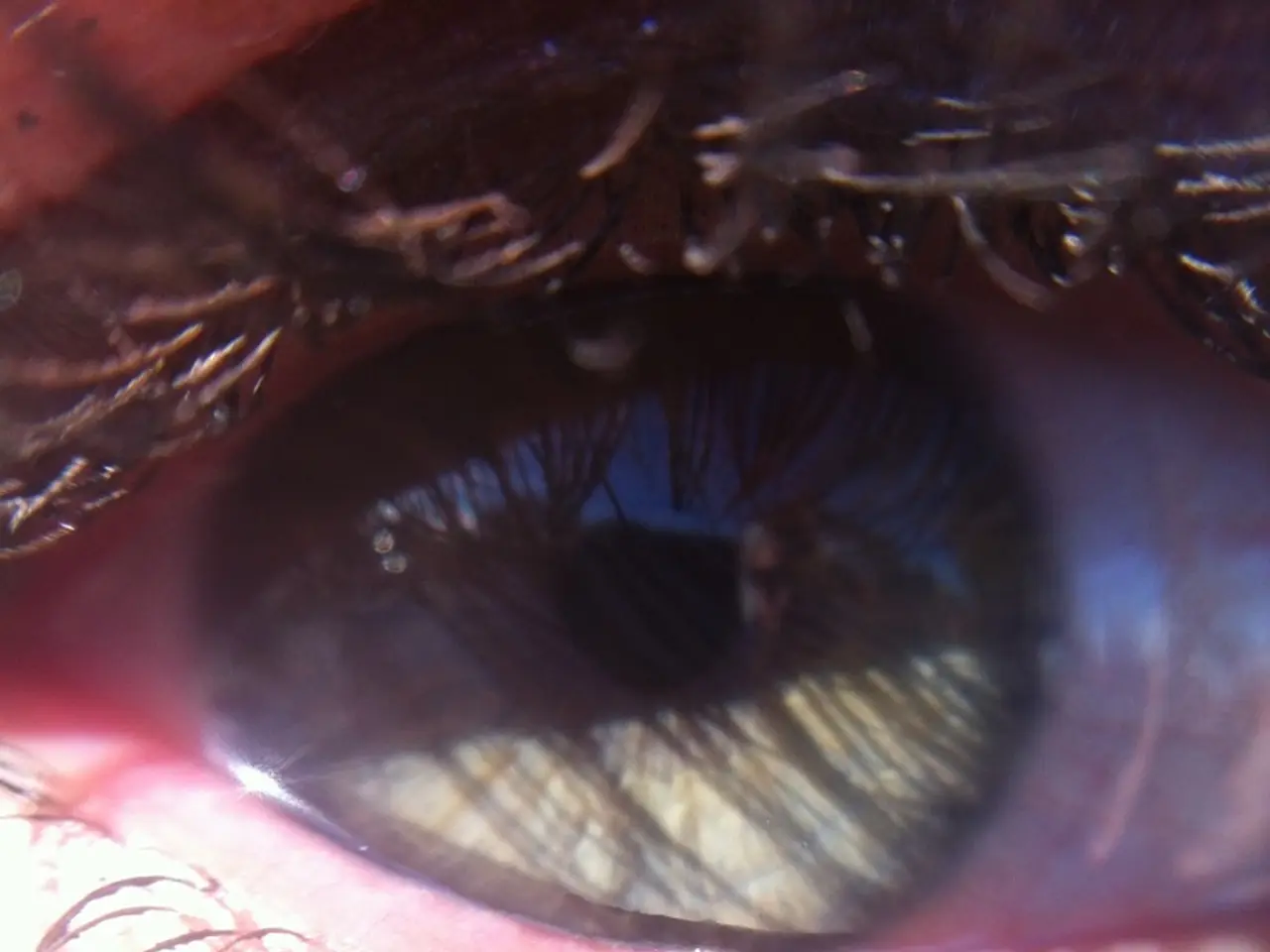
Corneal Edema Link to Persistent Dry Eye Condition
In the world of eye health, one condition that warrants careful attention is Corneal Edema. This article aims to shed light on this condition, its causes, symptoms, and potential treatments.
Corneal Edema is the accumulation of fluid in the stroma, the middle layer of the cornea. It is a sign of short- or long-term conditions affecting the cornea. Symptoms of this condition include light sensitivity, halos around lights, discomfort to foreign particles, and pain in the eye.
The root cause of Corneal Edema, particularly in dry eye disease, is a vicious cycle of inflammation and epithelial/endothelial damage. Severe dry eye leads to chronic inflammation and damage to the corneal epithelium and tear film instability, disrupting normal corneal hydration control. This, in turn, causes swelling and loss of corneal transparency characteristic of Corneal Edema.
Several factors contribute to dry eye, including health conditions such as thyroid disorders, diabetes, autoimmune disorders, and Sjogren's disease or lupus. Long screen time, less blinking, and spending time in smoky, windy, or dry environments can also lead to dry eyes. Certain medications, such as those for high blood pressure, depression, colds, and allergies, can cause dry eye as well.
In some cases, the treatment for Corneal Edema includes using hypertonic saline drops. For people whose edema builds up overnight, some doctors may advise using a hair dryer to hasten the evaporation of tears. However, it's crucial to note that the use of certain eye drops, especially those with preservatives or toxic agents, may exacerbate Corneal Edema.
Inflammatory conditions can be treated to reduce inflammation and temporarily reduce Corneal Edema. The treatment for dry eye may involve using artificial tears or avoiding smoky environments. It's essential to consult with an eye care professional for personalised treatment plans.
The cornea, the transparent outer surface of the eye that covers the pupil and iris, plays a vital role in maintaining eye health. The endothelium, the innermost layer of the cornea, is responsible for actively pumping fluid out of the stroma. Factors such as loss of endothelial cells, dysfunction of endothelial cells, high pressure within the eye, inflammation, and the breakdown of the epithelium can lead to Corneal Edema.
In summary, understanding Corneal Edema and its causes is crucial for maintaining eye health. By being aware of the symptoms, causes, and potential treatments, individuals can take proactive steps to protect their vision. Always consult with a healthcare professional for personalised advice and treatment.
Dry eye diseases can lead to Corneal Edema, as the accumulation of fluid in the stroma results from a vicious cycle of inflammation and epithelial/endothelial damage caused by chronic dryness. In the realm of health-and-wellness, various factors can contribute to dry eyes, including certain health conditions, lifestyle habits, and prolonged exposure to dry environments. To mitigate the risk of Corneal Edema and other eyedisorders associated with dry eyes, it is advisable to consult with a healthcare professional and follow their recommended treatments, such as using artificial tears or minimizing exposure to dry conditions.