
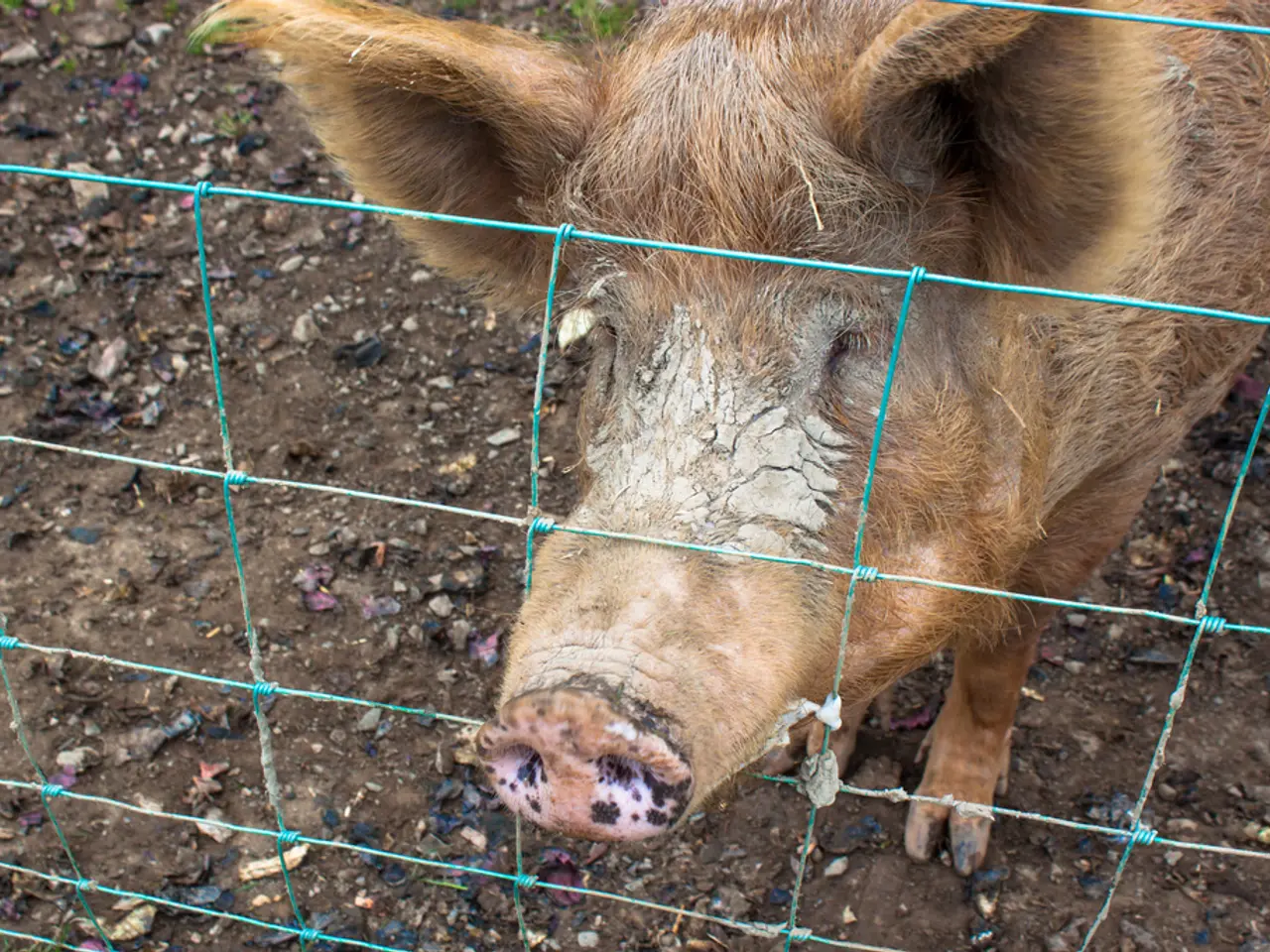
Intensifying African Swine Fever epidemics plague Vietnam
Rising African Swine Fever Outbreaks Pose Threat to Vietnam and Global Pork Market
The African swine fever (ASF) outbreaks in Vietnam have been escalating rapidly in 2025, with the number of reported cases more than tripling since mid-July. According to reports, over 900 outbreaks have been recorded, affecting 28 out of 34 provinces[1][3][4][5]. The number of infected pigs has surged from around 30,000 to over 100,000 within weeks, with pigs either dying or culled to contain the disease[1][3][4][5].
In response, the Vietnamese government has issued urgent directives from Prime Minister Pham Minh Chinh, calling on all provinces and relevant agencies to activate resources, enhance surveillance, swiftly cull infected pigs, and crack down on illegal pig transport and sales to curb the spread[1][2][3][4][5].
Vietnam became the first country to approve and commercially deploy an ASF vaccine domestically in 2023, but vaccine uptake remains low—estimated at about 30% vaccinated in some provinces—due to concerns about the vaccine’s cost, availability, and inconsistent effectiveness[1][3][5]. The official Vietnamese vaccine producer, AVAC Vietnam JSC, has sold millions of doses domestically and internationally but has not fully disclosed efficacy data, leading to questions about vaccine quality[1][3][5].
Nguyen Xuan Duong, chairman of the Animal Husbandry Association of Vietnam, stated that no province is safe from the disease[2]. The resurgence of ASF in Vietnam is adversely impacting domestic pork supplies and raising concerns of wider disruption to the global pork market, building on the precedent of earlier ASF outbreaks in Asia, such as the 2018-19 China epidemic which caused losses over $100 billion and massive pig population reductions[1][3].
In summary:
- The current outbreak scale: Over 900 outbreaks, 28 provinces affected, 100,000+ pigs infected/culling in 2025.
- Government response: Urgent directives for containment, surveillance, culling, and crackdown on illegal pig trade.
- Vaccine situation: First commercial ASF vaccine used since 2023, low uptake (~30%), questioned efficacy and cost.
- Impact: Threat to Vietnam's pork supply and potential destabilization of global pork market.
This situation remains dynamic and is closely monitored because Vietnam is a significant pork producer in Southeast Asia, and continued outbreaks may exacerbate global pork supply chain uncertainties[1][3][4][5].
References: [1] Reuters, (2025). Vietnam's African swine fever outbreak surges, raising concerns for global pork market. Retrieved from https://www.reuters.com/article/us-vietnam-swine-outbreak-idUSKCN24R02P [2] VietnamNet Bridge, (2025). No province is safe from African swine fever, warns head of Animal Husbandry Association. Retrieved from https://vietnamnet.vn/en/news/no-province-is-safe-from-african-swine-fever-warns-head-of-animal-husbandry-association-463864.html [3] Livestock Research for Rural Development, (2025). African swine fever outbreaks in Vietnam: A rising threat to global pork supplies. Retrieved from https://www.lrrd.org/lrrd2025/4/LRRD25-4-1.htm [4] World Organisation for Animal Health, (2025). African swine fever situation in Vietnam. Retrieved from https://www.oie.int/en/animal-health-in-the-world/african-swine-fever/african-swine-fever-situation-in-vietnam/ [5] AVAC Vietnam JSC, (2025). African swine fever vaccine: Frequently asked questions. Retrieved from https://avacvietnam.com/faq/african-swine-fever-vaccine/
- The crisis in the world's culture of health and wellness is evident in the ongoing African swine fever outbreaks in Vietnam, where the rapid escalation of cases is raising concerns about the global pork market.
- Following the surge in reported cases, the Vietnamese government has actively responded with urgent directives for enhanced surveillance, swift culling of infected pigs, and crackdowns on illegal pig trade, hoping to contain the medical-conditions caused by the disease.
- Despite the availability of an ASF vaccine since 2023, vaccine uptake remains low, and questions about efficacy and quality persist, potentially impacting the future of world science and agriculture in addressing this threat.