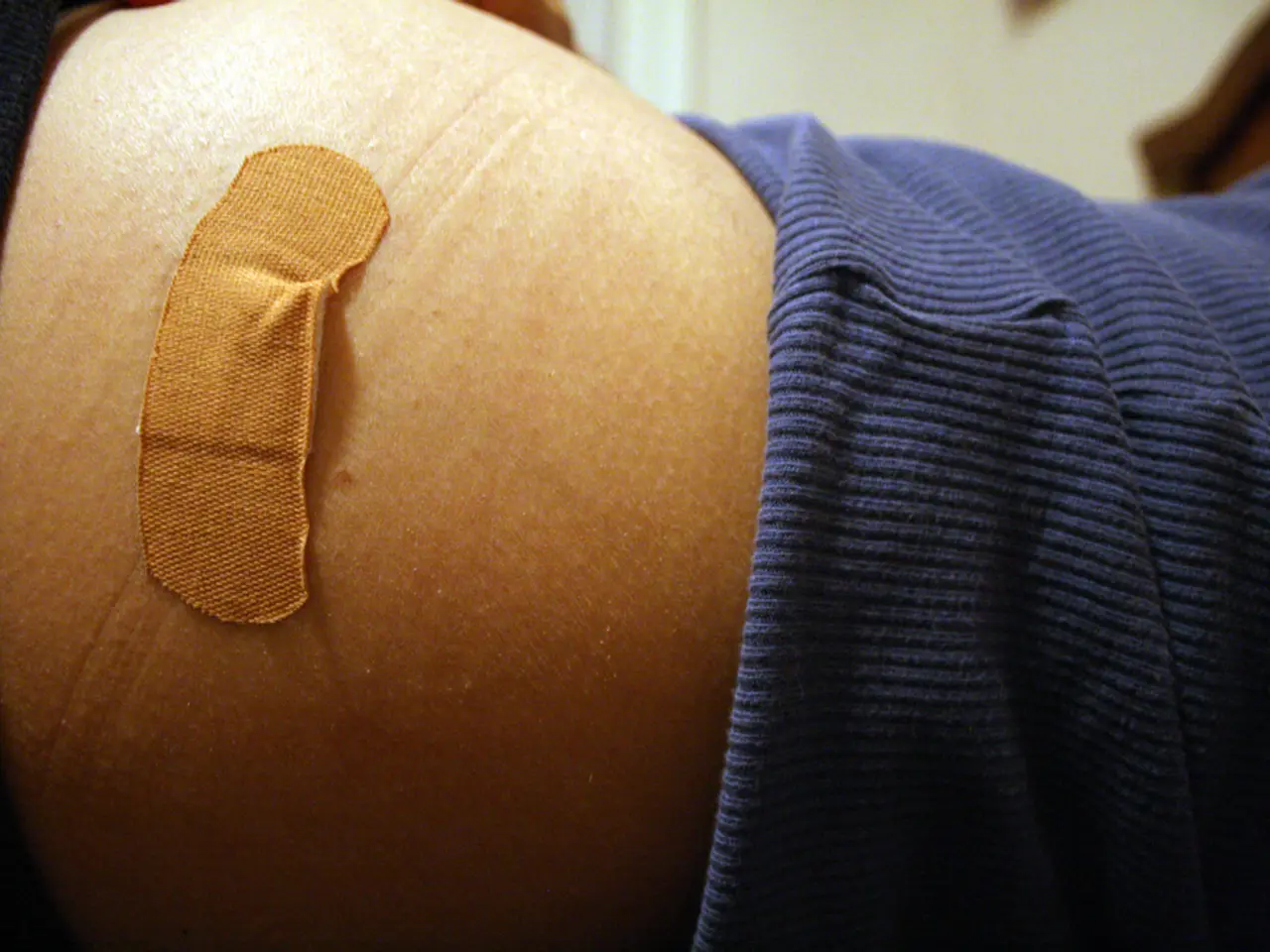
Medical innovation promises a 30% enhancement in healing rates with its new device.
Revolutionary Ultrasound Device Promises Faster Wound Healing
A groundbreaking medical device developed in the UK is set to revolutionise wound care, offering a potential saving of up to £3.1 billion annually for the National Health Service (NHS) by getting patients back on their feet faster and freeing up medical staff from long-term wound care.
The device, which uses focused ultrasound technology, stimulates faster wound healing by generating localised mechanical and electrical effects that reactivate skin cell functions essential for tissue repair. This non-invasive and drug-free treatment carries minimal risk of side effects associated with drug treatments, as it simply jumpstarts the body's own repair system.
The technology works by using focused ultrasound to trigger tiny vibrations called nano-vibrations that stimulate skin cells surrounding a wound. These vibrations agitate the cellular membrane, opening up channels that allow calcium ions to flood into the cell, acting like a wake-up call for the cells. This process reawakens the natural abilities of skin cells, promising up to 30% faster healing.
Researchers are focusing on fine-tuning the ultrasound frequency and duration for maximum effectiveness. The device shows promising results in treating chronic wounds, which are a growing public health crisis, especially for groups like diabetics and older adults who often struggle with chronic wounds that stubbornly refuse to heal.
The device's development timeline could be shorter than that of a new pharmaceutical due to the wide use and understanding of ultrasound technology. In theory, we could see this technology hitting clinics in as little as three to four years, assuming further trials confirm its safety and effectiveness.
The hurdles for regulatory approval could be lower than for a brand-new drug due to the wide use and understanding of ultrasound technology. The device could become accessible at home for treating minor cuts, scrapes, or post-surgical wounds.
This technique has not been widely used before in medical treatments for wound healing due to the complexity of rigorous validation and the need for integration of ultrasound with electrical stimulation systems. However, the device has passed crucial proof-of-concept hurdles and is currently in the developmental stage.
The cells aren't being changed or replaced, they are simply being reminded of what they already knew how to do. The portable, low-risk, and well-tolerated device has shown significant healing improvement in lab tests, with wounds healing faster and tissue regeneration looking more like what researchers see in younger, healthier patients.
Diabetic foot ulcers affect more than 25% of people with diabetes during their lifetime and are a leading cause of lower limb amputations. This new device could potentially reduce healing times dramatically, offering a significant improvement in the quality of life for many patients.
Sources:
- Focused Ultrasound for Wound Healing: A Review of Mechanisms and Clinical Applications
- Focused ultrasound-mediated electrical stimulation for wound healing
- Focused ultrasound for wound healing: A systematic review
- Focused ultrasound: A new tool for wound healing
- Focused ultrasound-mediated electrical stimulation for wound healing: A review
- This revolutionary ultrasound device, leveraging technology from the field of science, could potentially transform health-and-wellness by providing therapies-and-treatments for medical-conditions like diabetic foot ulcers, reducing healing times and improving the quality of life for many patients.
- The skin-care benefits of this ultrasound device are promising, as it stimulates faster healing by reactivating skin cell functions through localised mechanical and electrical effects, offering a drug-free, minimally-invasive solution.
- As research continues to fine-tune the ultrasound frequency and duration for maximum effectiveness, this device could soon extend beyond hospital settings to become a portable solution for home use in treating minor wounds, supported by its lower regulatory hurdles compared to new pharmaceuticals.