
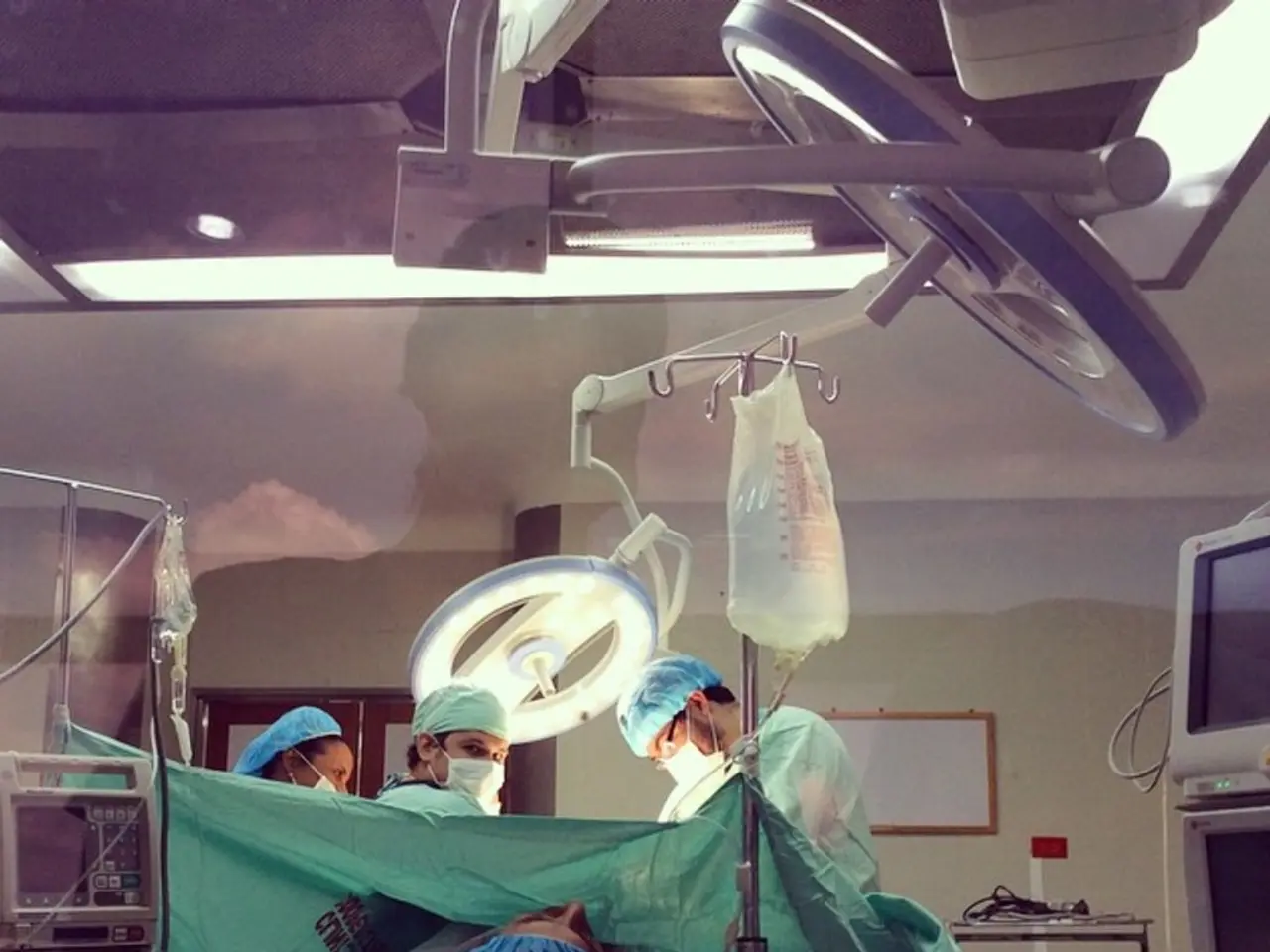
Surgical intervention via a small incision: Varieties, advantages, and pre-op preparation details
Keyhole surgery, also known as minimally invasive surgery or laparoscopic surgery, is a modern medical technique that offers numerous benefits over traditional open surgery. This article provides an overview of keyhole surgery, its advantages, and the potential risks involved.
Keyhole surgery is performed through small incisions using a device called a laparoscope. The surgeon creates one or more small incisions, called ports, which are just large enough to allow surgical instruments to pass through. During the surgery, the surgeon uses the ports to pass cameras and instruments into the body and uses a video monitor to see what is taking place inside the body [1].
One of the primary advantages of keyhole surgery is its shorter recovery time. Compared to open surgery, keyhole surgery has a shorter recovery time due to the smaller size of the incisions [2]. The smaller incisions cause less pain and bleeding, and they heal faster, leading to shortened recovery times following keyhole surgery [6].
Another benefit of keyhole surgery is the reduced scarring. Since the incisions are smaller, the resulting scarring is smaller and less pronounced than it is after open surgery [7].
Keyhole surgery can be used on nearly every part of the body, with specific names for procedures on different regions, such as arthroscopy, laparoscopy, parathyroidectomy, and video-assisted thoracoscopic surgery (VATS) [3]. However, it's essential to note that the type of surgery and the condition requiring treatment will determine when a person can resume their usual activities. Their healthcare team will discuss this with them after the procedure [4].
While keyhole surgery offers numerous benefits, it is not without risks. The potential complications associated with keyhole surgery generally include infection at the surgical site, bleeding or bruising around the operated area, nerve or blood vessel injury, blood clots, chronic or prolonged pain, sensitive or numb scars, damage to the joint or adjacent organs, complications related to anesthesia, and specific issues related to certain types of keyhole surgery [1].
For example, in laparoscopic surgery, the surgeon may pump carbon dioxide into the abdomen to increase the space and allow better access and visibility. After the surgery, the surgical team will let the gas out. In some cases, gas may remain behind and cause temporary shoulder pain [5]. Additionally, specific to hip arthroscopy, traction used during surgery can cause temporary or rarely permanent numbness or altered sensation in the groin or genital area [1].
In conclusion, keyhole surgery offers numerous benefits, including a shorter recovery time, reduced scarring, and fewer complications compared to open surgery. However, it's essential to be aware of the potential risks involved and discuss them with your healthcare team before undergoing the procedure.
References: [1] Mayo Clinic. (2021). Minimally invasive surgery. https://www.mayoclinic.org/tests-procedures/minimally-invasive-surgery/about/pac-20394862 [2] NHS. (2021). Keyhole surgery (laparoscopic surgery). https://www.nhs.uk/conditions/keyhole-surgery/ [3] Cleveland Clinic. (2021). Minimally Invasive Surgery. https://my.clevelandclinic.org/health/treatments/16898-minimally-invasive-surgery [4] Johns Hopkins Medicine. (2021). Minimally Invasive Surgery. https://www.hopkinsmedicine.org/health/treatment-tests-and-therapies/minimally-invasive-surgery [5] American Society of Anesthesiologists. (2021). Carbon Dioxide Retention. https://www.asahq.org/patients/carbon-dioxide-retention/ [6] American College of Surgeons. (2021). Advantages of Minimally Invasive Surgery. https://www.facs.org/quality-programs/advanced-trauma-life-support/atls-updates/2018-atls-update/advantages-of-minimally-invasive-surgery [7] University of Rochester Medical Center. (2021). Minimally Invasive Surgery. https://www.urmc.rochester.edu/encyclopedia/content.aspx?ContentTypeID=90&ContentID=P09341
Subject to shorter recovery times due to less pain and bleeding, keyhole surgery can be an effective alternative for various medical-conditions. This science-driven approach to surgical procedures, such as arthroscopy, laparoscopy, parathyroidectomy, and video-assisted thoracoscopic surgery (VATS), offers reduced scarring compared to othersurgeries. Nevertheless, it is crucial to discuss potential risks with one's healthcare team, which may include infection, nerve or blood vessel injury, blood clots, chronic pain, sensitive or numb scars, and specific complications related to certain types of keyhole surgery. Health-and-wellness ultimately depends on understanding the benefits and risks associated with these modern surgical techniques.