
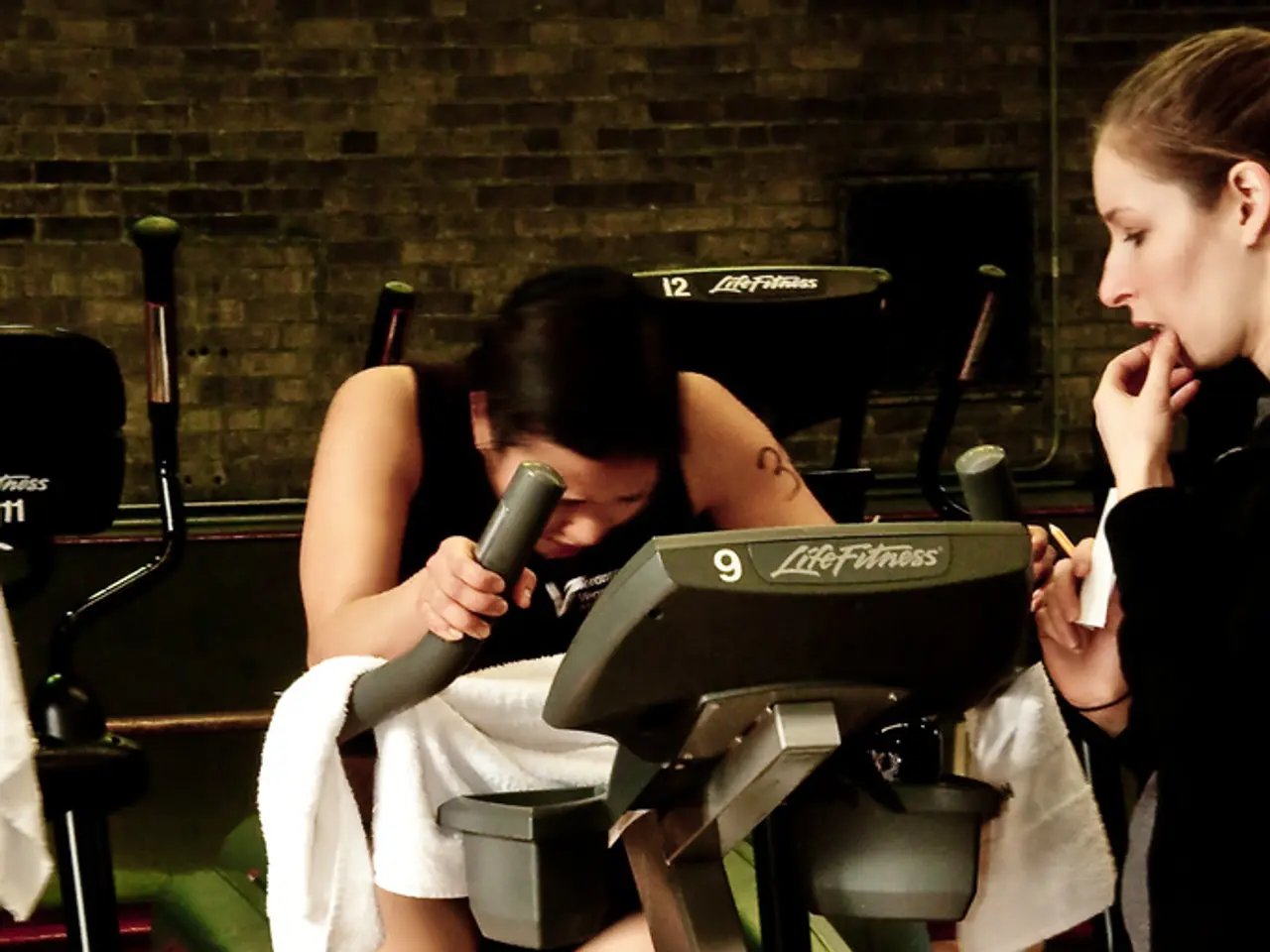
Uncertain about performing Reformer Pilates while pregnant, but upon receiving medical approval, I've grown fond of the workout.
Prenatal Reformer Pilates: A Safe and Beneficial Exercise Option During Pregnancy
Prenatal Reformer Pilates can be a valuable addition to a pregnant woman's fitness routine, offering numerous benefits for both the mother and the baby. However, it is crucial to approach prenatal Reformer Pilates with caution and professional guidance.
Firstly, it is advisable to double-check that the instructor leading the class is qualified in pre- and postnatal exercise. A qualified instructor can customize the exercises to suit the needs of a pregnant body, ensuring a safe and effective workout.
Prenatal Reformer Pilates may not be as gentle as a regular reformer class, contrary to popular belief. The focus is on breath-led movement, spinal mobility, glute and core strength, and functional movement patterns that support pregnancy, birth, and recovery. Exercises are adapted to suit the needs of a pregnant body, and the load on the springs should be modified for each individual.
One study published in the journal BMC Pregnancy and Childbirth concluded that prenatal Pilates significantly reduces labour pain intensity, length of the active phase and second stage of labour, and increases maternal satisfaction with the labour process. Another study, published in 2025, found that Pilates is effective for improving sleep quality, pain, depression, and other maternal health outcomes during pregnancy.
Benefits of prenatal Reformer Pilates include strengthening deep core muscles (like the transverse abdominis), back, and glutes, which support the growing belly and improve posture, reducing back pain. Pelvic floor support is also a key focus, with exercises teaching both strengthening and controlled release, which can help with labor efficiency and reduce the risk of tearing.
Improved balance and stability are another advantage, as prenatal Reformer Pilates strengthens stabilizing muscles and enhances body awareness, helping compensate for pregnancy-related shifts in center of gravity and ligament laxity. Better breathing techniques are also taught, with diaphragmatic breathing that relaxes the nervous system, lowers blood pressure, and oxygenates muscles—useful during labor and postpartum.
However, there are also risks associated with prenatal Reformer Pilates. Exercising with improper instruction, especially from instructors without prenatal-specific training, can increase the risk of issues like pelvic girdle pain or diastasis recti (abdominal muscle separation). Doing exercises such as lying flat on your back after the first trimester, unsupported single-leg work that stresses the pelvic floor, or loaded abdominal exercises should be avoided.
To maximize safety, work with a Pilates instructor certified in pre- and postnatal care, preferably in a small group or one-on-one setting. Communicate openly about your pregnancy stage, any discomforts, and ask for trimester-related modifications rather than generic advice. Avoid movements contraindicated for pregnancy and those that place excessive load on the abdomen or pelvic floor.
In summary, prenatal Reformer Pilates is a valuable exercise option promoting strength, stability, and well-being during pregnancy if performed correctly with professional guidance and medical clearance. Numerous studies point to the beneficial effects of exercising while pregnant for both the mother and the baby's health. Ian Scudamore, consultant obstetrician and vice president of the Royal College of Obstetricians and Gynaecologists, confirms that moderate intensity exercise is beneficial during pregnancy. It is safe to do Reformer Pilates while pregnant, but with a few caveats. Lying flat on your back after the first trimester should be avoided during Reformer Pilates while pregnant.
- A qualified instructor, specializing in pre- and postnatal exercise, can customize prenatal Reformer Pilates for the needs of a pregnant body, ensuring a safe and effective workout.
- Prenatal Reformer Pilates can improve sleep quality, reduce labour pain, and enhance maternal satisfaction with the labour process, as supported by studies in journals such as BMC Pregnancy and Childbirth and other scientific publications.
- Enhanced balance and stability, improved body awareness, and better breathing techniques are key benefits of prenatal Reformer Pilates, helping pregnant individuals cope with pregnancy-related shifts in center of gravity and ligament laxity.
- Exercising improperly or without prenatal-specific guidance may increase risks, such as pelvic girdle pain or diastasis recti, and it's essential to follow modifications and avoid movements contraindicated for pregnancy.