
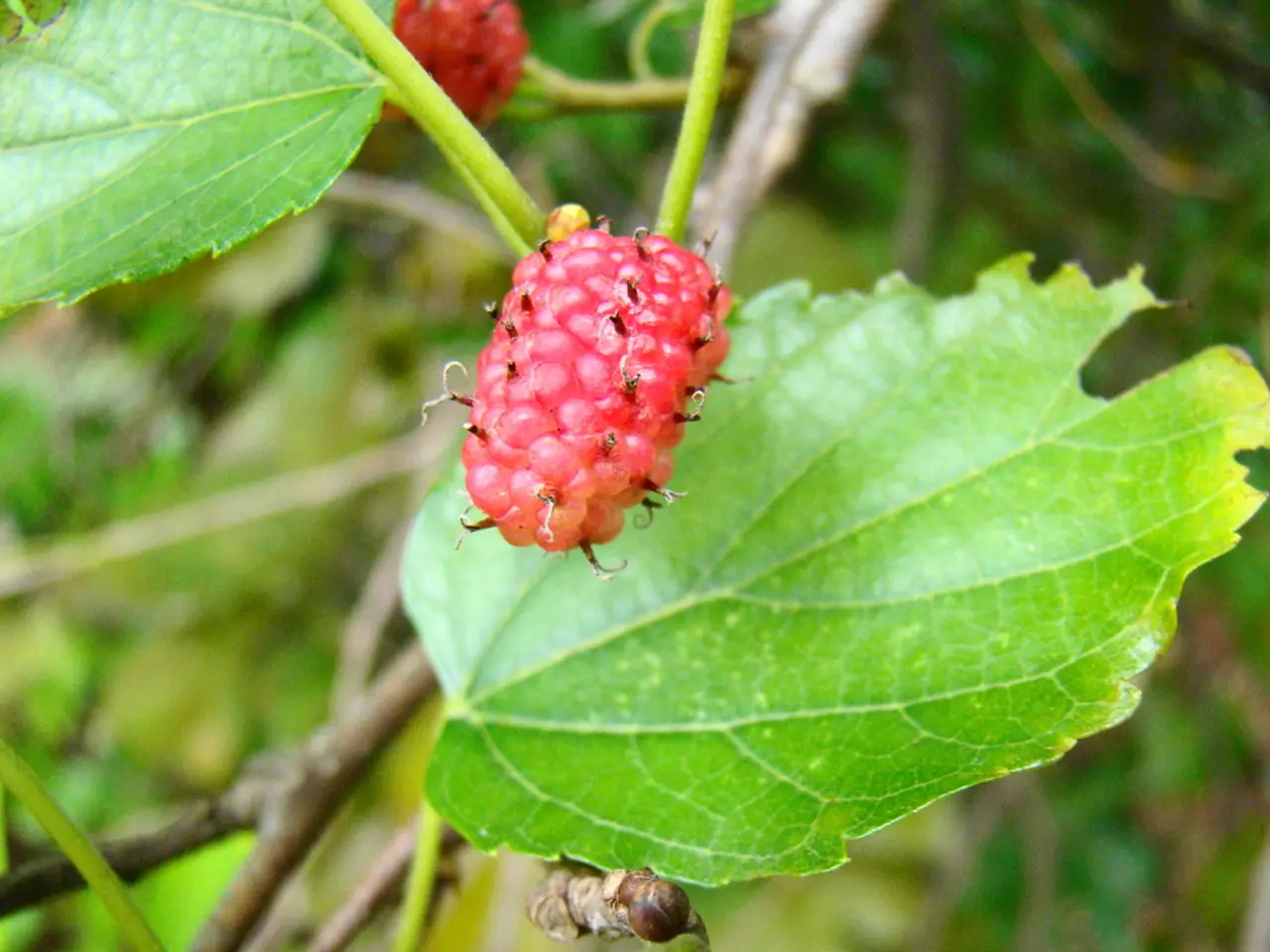
Unchecked Red Raspberry Decay Increases in Intensity
In the world of raspberry farming, one fungal disease stands out as a significant threat - Spur Blight. Caused by the fungus Didymella applanata, this disease is a concern for growers in the United States due to its potential to weaken plants and reduce yield and quality over time [1].
Spur blight typically infects raspberry canes, leading to lesions and dieback on young shoots and fruiting spurs. The disease can cause premature cane death, limiting fruit production as raspberries rely on healthy fruiting canes. The symptoms first appear on young first-year primocanes in late spring or early summer, with purple to brown lesions on the lower portion of the stem, expanding and sometimes covering all the area between two leaves [1].
During wet and rainy periods, spores are released and carried by splashing rain and wind to nearby primocanes. To prevent the spread of the disease, it's crucial to reduce the number and duration of wet periods. Good weed control is also important, as weeds can reduce air movement and provide a conducive environment for the disease [1].
Management of spur blight involves cultural practices such as pruning to improve air circulation, removing infected canes, and fungicidal treatments when necessary. After harvest, old fruited floricanes and infected first-year primocanes should be removed and destroyed. Maintaining plants in narrow rows and thinning them can also improve air circulation and allow better light penetration [1].
In late summer or early fall, bark in the affected area splits lengthwise and small black specks (pycnidia) appear in the lesions. These specks are a telltale sign of the disease. The fungus survives the winter in lesions on diseased canes, ready to infect new growth in the following season [1].
While detailed current data on the extent of damage or economic impact from the most recent season are not readily available, spur blight is considered a serious concern for raspberry growers because it can reduce the productivity and vigor of the plants if not managed properly [1]. It's important to note that excessive applications of nitrogen fertilizer should be avoided as it promotes susceptible succulent plant tissue growth [1].
For current spray recommendations, commercial growers should refer to Bulletin 506 and backyard growers should refer to Bulletin 780. The best time to remove old and infected canes is after they go dormant in early winter or early spring before new primocanes emerge [1].
This fact sheet on spur blight was originally published in 2008, providing a useful resource for raspberry growers. However, with the continuous evolution of agriculture and plant diseases, it's always advisable for growers to stay updated with the latest research and recommendations.
[1] Source: Extension.org, Rutgers New Jersey Agricultural Experiment Station, University of Maryland Extension, and Oregon State University Extension Service.
In the realm of pest management for raspberry farming, understanding the science behind diseases such as spur blight is crucial, as it can lead to medical-conditions like reduced plant health and yield. To ensure the health-and-wellness of raspberry plants, it's essential to adhere to current research and recommendations, such as avoiding excessive nitrogen fertilizer and implementing effective pest management strategies like cultural practices and fungicidal treatments.